

If you are trying to save money on groceries, one of the easiest places to start is knowing which items to skip at the grocery store. Not the things you grab on impulse but the items you buy every single week out of habit, without thinking too much about the cost or what’s actually in them.
This list is a collection of items we’ve stopped buying, or rarely buy anymore. Some we cut for budget reasons. Some for health reasons. Most for both. None of these swaps require a lot of effort. Just a small shift in habit that adds up to real savings over time.
If you’re looking for ways to spend less and eat better, this is a good place to start.
12 Items to Skip at the Store for Your Health and Your Grocery Budget:
1. Marinades and Sauces
I cannot remember the last time I bought a store-bought marinade or sauce. They might seem convenient, but they often sneak in lots of extra sugars (look on the label for “Added Sugars” to check this), unhealthy oils, MSG, sodium, and other mystery ingredients our bodies don’t need. They can also be really overpriced when you consider you can make them at home, most likely with the items you already have in your fridge or pantry. And when you consider you often don’t use the whole bottle, and it becomes one of those items pushed to the back of the fridge, the cost is even higher.
Instead, making your own is surprisingly simple, with endless varieties. We have created many easy homemade sauces and marinades for our Dinner Daily recipes, including our homemade teriyaki sauce.
My go-to when I need a quick marinade for seafood or poultry: about 1/4 cup olive oil, the juice of half a lemon, a tsp of Dijon, one or two cloves of chopped fresh garlic, and some basic spices such as oregano, basil, and onion powder. It takes about 5 minutes to pull together, and it is delicious. I also use this combo as an easy salad dressing. With this, you have full control over what goes into your food, and you’re eating only the best ingredients.
Making your own is an easy way to save money on groceries, and it is almost always healthier. And since you only make what you need, you will waste and spend less.
2. Salad Dressings
Although it might be easy to grab a bottle of salad dressing from the store, like the marinades, many are packed with hidden sugars, lots of sodium, and unhealthy fats. Making your own is not only healthier but also surprisingly simple. Use the basic recipe above, or create your own vinaigrette with olive oil and your favorite vinegar (red wine, apple cider, or rice vinegar are my favorites), then add some spices from what you have on hand.
Another favorite in our house: two tablespoons of olive oil, two tablespoons of fresh lemon juice, sea salt, and black pepper to taste. It’s so simple and makes your greens come alive every time.
3. Pre-Marinated Meats
This one has become much more common in stores over the past few years. Chicken, pork, and beef sold pre-marinated and ready to cook sounds convenient, but the markup is significant, and most of these products are loaded with sodium and additives you wouldn’t choose to add at home.
Marinating your own takes almost no extra time, especially if you are already meal planning. Mix up a simple marinade the night before or in the morning, let it sit, and you’re done. You will pay less for the meat and know exactly what went into it. With the go-to marinade from tip #1 above, you already have your marinade recipe!
4. Single-Serve Snack Packs and Pre-Cut Produce
Those individually portioned bags of nuts, trail mix, crackers, and cut fruit are everywhere, and they are genuinely convenient. But you are paying a significant premium for that convenience, sometimes two to three times more than buying the full-size version and portioning it yourself.
And here’s a food safety point worth knowing: any time you buy produce that has already been cut or prepped, the risk of contamination goes up. Once the skin of a fruit or vegetable is broken, bacteria have a point of entry that wasn’t there before. Buying whole and cutting at home is both safer and more economical. A 15 to 20 minute task on Sunday takes care of your snacks for the whole week.
5. Bottled Water
We have made a conscious effort in recent years to reduce our use of plastic, not only for environmental reasons but also for health. If you have caught the recent headlines about how we are unknowingly consuming plastic, pulling away from buying bottled water was an easy place to start. At home, we fill glass jugs with filtered water (we use a simple filtering device on our faucet), and when heading to the gym or traveling, we use glass or stainless steel bottles.
It is also another straightforward way to save money on groceries. When you consider how much you spend each week on bottled water, over the course of a year, that adds up. Invest in a reusable bottle and a home water filter and it pays for itself quickly.
6. Spice Mixes
Those fancy spice blends can seem tempting, but they often come with a hefty price tag and can include unnecessary ingredients, including more salt than you would ever choose to add yourself. Making your own is a lot easier than it sounds.
Need an Italian spice mix? Mix together a teaspoon each of oregano, basil, sage, rosemary, garlic powder, salt and pepper. You’ll save money and have more control over the flavors in your dishes.
7. Deli Meat
Deli meats might seem like a quick option, but the reality is they are a processed food, often packed with way too much sodium and preservatives. A one-ounce serving of deli turkey can contain up to 500mg of sodium. Given the American Heart Association recommends no more than 2,400mg a day from all sources, that is a significant amount for a single one-ounce serving.
A better alternative is to roast your meats at home. It really is quite easy once it becomes part of your routine. We often cook a batch of chicken tenders or breasts, slice them, and store in the fridge for quick sandwiches or salads. Another option is canned salmon, or hearty veggie wraps with hummus, avocado, sliced cucumbers, and greens.
8. Prepared Meals
While prepared meals may save you time, next time you’re tempted to grab one from the store, check the ingredients and nutritional values. You might be surprised by the sodium and fat content, even in meals that appear healthy.
If you find yourself reaching for prepared meals too often, it might just be that spending a bit of time planning before the week starts is all you need. Whether that is meal prepping on the weekend or using a planning service like The Dinner Daily, once you get into the habit of cooking at home, you will find that those store-prepared meals with their significant markups are not nearly as tempting.
9. Plastic Storage Bags
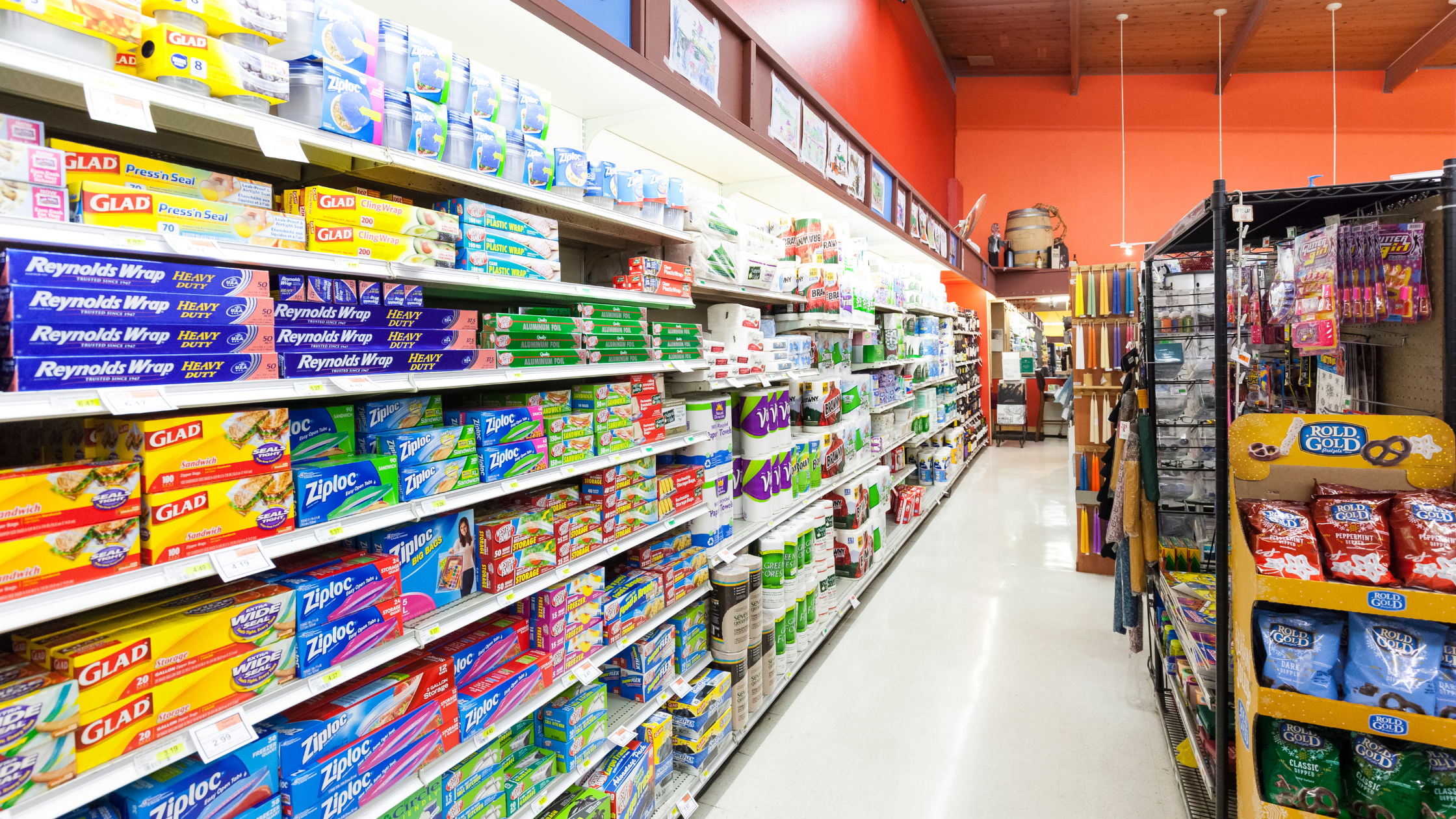
Like the plastic water bottles, this is an easy place to cut back on spending and your exposure to plastic. Many of us (myself included) always just reached for plastic storage bags as part of our regular grocery run. They were a staple in our kitchen for school lunches and storing leftovers. But as we looked for ways to lower our grocery bills, cutting out plastic bags was one of the first things we did.
We now store leftovers in glass containers only, and for on-the-go sandwiches or snacks, we use unbleached paper sandwich bags or glass. These options are durable, eco-friendly, and will save you money over time. Plus, being able to see your leftovers clearly in the fridge means you are more likely to actually use them.
10. Frozen Smoothie Packs
With the popularity of smoothies and juice bars, these pre-made packs have been showing up everywhere in stores. They are marketed as easier, but they often come with a significant markup and, for many brands, unnecessary added sugars. I have a friend who had been buying these at the grocery store for an easy breakfast without ever really considering how much markup she was paying, or how much added sugar was inside.
Instead, come up with a few go-to smoothie recipes of your own. If you are short on time, assemble the ingredients in your blender the night before and blend when you are ready. Your ingredients will be fresher, and you won’t be paying for an overpriced frozen mix.
11. Flavored Yogurts
Flavored yogurts are a huge source of added sugar, which is a bit confusing since yogurt itself offers real health benefits and is an excellent protein and calcium-rich snack for kids. But the way it’s commonly sold at the store is another story. The average 6-ounce yogurt container has between 13 and 18 grams of added sugar, and some premium brands push 28 grams. That is a significant amount of sugar and takes what should be a healthy food well into dessert territory.
To put it in perspective: women are recommended to have no more than 25 grams of added sugar per day, men 36 grams, and children 24 grams. That one small yogurt can take you to 50% or more of your daily recommended amount before you’ve even had breakfast.
Instead, buy plain with no added sugars and flavor it yourself with fresh fruit, a sprinkle of nuts, and a small drizzle of honey if you need a little sweetness. It might be a taste adjustment at first, but the natural sweetness of the fruit and the crunch of the nuts is so satisfying you won’t miss all that sugar. To make it more economical, buy the large tub rather than individual containers.
12. Microwave Popcorn
Who doesn’t love popcorn for a family movie night? Microwave popcorn is convenient, but it is often full of artificial flavors and unhealthy fats. There is also ongoing controversy about what is in the lining of the bags. Instead, buy a bag of kernels from the store for pennies per serving and pop them on the stove or use an air popper. It’s a healthier and far cheaper option, and you control how you season it. I love mine with a sprinkle of garlic and onion powder, with just a little butter.
A Few Final Thoughts
This list is not meant to be overwhelming. If it feels like a lot, start by picking one or two items to skip buying this week. Once you no longer give those items a second thought, add a few more. Over time, you won’t think twice about skipping them.
One of the best ways to make a real dent in your grocery bills is to get organized before you hit the store. Having a plan built around your store’s weekly specials means you’re already set up to spend less before you put a single item in your cart.
If you need help with that, check out our free trial for The Dinner Daily. We build you a personalized weekly menu based on what’s on sale at your store, with a shopping list ready to go. Your first two weeks are on us.